
hope matters, hope matters, hope matters
“Some books change hearts, others
change minds, and a few lift spirits.
This marvelous book does all three.”

– John J. DiIulio, Jr., Senior Fellow,
Brookings Institute

Order Now!

hope matters, hope matters, hope matters
public speaker

John A. Calhoun speaks about his book, along with 3 featured
people at Chappaqua New York Forum.

Below: Check out Jack’s speeches and reactions to them, his published articles and how to book him.

FEAR AND PUBLIC POLICY:
REDIRECTING THE TIDE

It doesn’t seem that long
ago. From my 13th floor office on K Street in Washington, my staff and I at the National Crime Prevention Council (NCPC), witnessed plumes of smoke gushing up from the Pentagon, the last of the 9/11 hijacked planes having just completed its attack. But what to do about it?

NCPC’s mission has always been dual: stopping crime and helping people build caring communities. Stopping crime alone can result in either a police state, or citizens huddled in fear and isolation behind closed doors. NCPC maintained that crime claims two victims—an individual and a frightened community whose civic bonds have been torn. By watching out and helping out its residents help a community heal.

On that September day in 2001, with smoke, sirens and fear hovering, people poured into the street racing to drive or metro home. As I looked out my window at the corner of Connecticut and K, a scene unfolded below me that will never leave my mind: two citizens, each with suit jackets draped over their briefcases stood in the middle of the street directing what had been chaotic traffic. All law enforcement had been summoned to the Pentagon or possible targets like the Capitol and the White House. Most people, understandably, were focused inward, fearing for themselves and their loved ones. But a few transcended fear, staying to help others.

On the following day I gathered my staff who had been able to come in to work. I asked them to help collectively determine what our response should be to this calamity. Whenever we looked at a particular crime problem, we always employed a three-part template: self, neighborhood, larger community. We tried to apply this template to the horror of 9/11. We decided first to ensure that each person (the “self” part) should be individually prepared and protected to the extent possible (water, flashlight, sneakers, etc.). Second, viewing our staff as “neighborhood,” we asked who would be willing to house whom in case staff were unable to reach their homes in Virginia or Maryland. We had more than enough volunteers.

Third, we tackled what our “healing” or community response should be.

One staffer heard reports that a Palestinian book-store owner in Alexandria, Virginia had two bricks thrown through his store’s plate glass window. Each brick was inscribed “Dirty Arab Go Home.” Staff were eager to right this wrong, to help heal at least this one wound. We took up a collection and drove to Alexandria to hand over the money to replace the window. I hoped for—and got—news coverage, not for ego, but to make a positive public statement in a climate of bewilderment, rage and fear. I presented the check to the owner saying something like “99.9 percent of Americans do not throw bricks through windows. What Americans do is what you see on TV, and hear on the radio: people risking time, money, blood, even their lives at the Pentagon and in New York, trying to rescue people from the collapsed World Trade Center Towers. This response, this check is really who Americans are.” All three of us—myself, the reporter and the owner—had tears streaming down our faces.

After 9/11 the world came to our Nation’s doorstep with sympathy, money, and offers of help. Yet within a few short months, it was us/them, “axis of evil,” and preparations for war with Iraq. And so the fear card--the cheapest, most primal (and most understandable) of cards—was played.

Sadly, violence and fear are frequent visitors to our communities. Within the last month, America has witnessed an appalling spate of shooting: four police officers slain in Oakland, three in Pittsburgh, 17 people shot (three fatally) in Buffalo, eight nurses and patients killed and wounded in North Carolina to cite only a few. The numbers stagger, dwarfing the U.S. deaths in Iraq in a like period. The New York Times put it this way: “Since Sept. 11, 2001, when the country’s attention understandably turned to terrorism, nearly 120,000 Americans have been killed in non-terror homicides…Think about it—120,000 dead. That’s nearly 25 times the number of Americans killed in Iraq and Afghanistan.” One city I know of and currently help to work in boasts nine parks, yet one street worker somberly observed, “We only use one. Eight parks are never used because people are afraid to gather, afraid of ‘drive-bys.’”

The obscene availability of guns, civic collapse, bleak job prospects, and reductions in available services has created a climate in which a “get tough,” “us/them” response can arise from a frightened public—a response that puts mayors city managers and police chiefs in extremely difficult positions. In the face of shaky schools, poor parenting, job loss and disconnection from community and hope people turn to law enforcement to solve the problem—and to solve it immediately. Such a response is totally understandable, but both unrealistic (law enforcement should shoulder all of society’s burdens?) and unfair (where is our responsibility?).

For the last three years I have been helping to coordinate the 13-City Gang Prevention Network for the National League of Cities Institute for Youth, Education and Families. Each participating city has committed itself to a detailed city-wide action plan that blends prevention (such as family support, early childhood education), intervention (after school programs, mentoring, etc.) and enforcement. The core of the strategy is the acknowledgement by all that nothing will change, and violence will not be reduced unless all key entities—governmental, civic, law enforcement, faith, education and families—assume some of the burden and agree to take specific actions. Tough and caring leadership is essential because fear is an easy card to play, a card that usually brings re-election.

It’s not a soft approach. No one tolerates violence. The message is dual: the violence has to stop and we—all of us—must help. This is not just rhetoric. The work in each of the Network cities is extremely promising. In some of the cities, violent, gang-related crime has dropped. I have been profoundly impressed by certain city leaders who have the manifest courage both to enforce where appropriate, and to spurn quick, fear-based solutions, committing themselves, rather, to building healthy communities that do not produce crime. Yet…it can be frail. Extreme fear triggered by a spike in homicides can tip the balance, unhinging individuals, communities and, as we have seen, nations. It takes courageous, fully-engaged and focused civic leadership and deep personal commitment both to be intolerant of violence and to transcend fear--to snatch off your coat and direct traffic as others flee home.

Best,
Jack

REVIEWS!

• Policy and Practice
• The Roundtable
• Fasten Network
• San Jose Mercury News

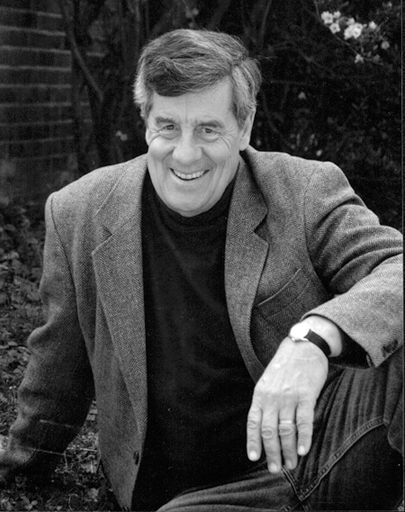
Former President and CEO of the National Crime Prevention Council; U.S. Commissioner of the Administration for Children, Youth and Families; Senior Consultant National League of Cities, Institute for Youth, Education and Families; Coordinator, 13-City Gang Prevention Network

We don’t often hear about the
ordinary people whose faith
inspires them to do the extra- ordinary. They are Christians and Jews, Muslims and Baha’is, Hindus and American Indians. In Hope Matters, John A. Calhoun examines how people balance their public work with their private faith and how their faith makes a difference in how they do their work.
“Jack Calhoun’s amazing stories take that healing to the next step. His book can restore you and your community. This is my “must-read” recommendation. Read it. Pass it on. Spread the word.”

— Richard Paul Evans, author
The Christmas Box (seven million copies sold worldwide)

“Don’t miss the opportunity this book offers. John A. Calhoun shines a light on the universal and wondrous alchemy of faith when people turn personal suffering into acts of compassion and service, bringing communities closer together. Reading about these ‘reshapers’ is renewing, inspiring, and deeply affecting.”

— The Reverend Dr. Robert W. Edgar, President and CEO Common Cause
Former General Secretary of the National Council of Churches USA

“Calhoun shares deeply moving stories of individuals who, often working against all odds but driven by faith, bring hope to communities, to our children and to our country. We can all be everyday heroes.”

— Marguerite W. Sallee, President and CEO
America’s Promise


Home | About Jack | About This Book | Book Excerpts | Discussion Guide for Book Clubs | Press Release | Flyer | Order Book | What People Are Saying About Jack's Book | What People Are Saying About Jack's Speeches | Selected Past Speeches | Upcoming Appearences | Booking John Calhoun? | Articles and Media | Violence Prevention | Previous Notes from Jack |Contact Us

© 2008 Jack A. Calhoun Designed by Cheryl Phillips Design